
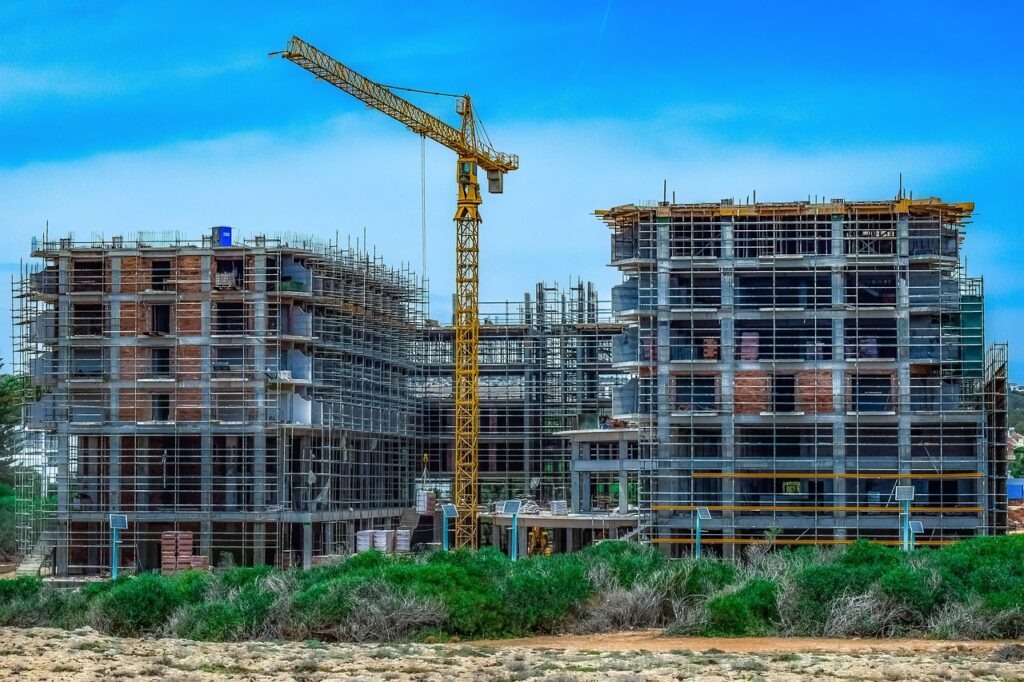
Construction contract in return for a share of land is a contract under which the landowner undertakes to transfer specified shares in the land and the contractor undertakes in return to construct a building on that land. Because it involves the transfer of a share in land, it must be executed by a notary public in official form; the right arising in favour of the contractor may also be asserted against persons who subsequently acquire rights if an annotation is entered in the land registry.
The contract contains two obligations side by side: transfer of a share in immovable property and performance of work. The construction obligation is assessed under the rules governing works contracts (Turkish Code of Obligations art. 470 et seq.); as regards form, however, the contract is a single whole.
The general framework of immovable property disputes is explained on the Tenancy and Real Estate Law page, and the general rules on works contracts, default and limitation periods on the Contract Law page. This article addresses the construction contract in return for a share of land itself.
Form requirement for a construction contract in return for a share of land: execution by a notary public
The law contains no separate provision that regulates the form of this contract by name; the result follows from reading two provisions together:
- The validity of contracts intended to transfer ownership of immovable property depends on their being executed in official form (Turkish Civil Code art. 706/1). A construction contract in return for a share of land that includes the transfer of a share in land falls within this scope.
- Contracts entered into without complying with the prescribed form have no effect (Turkish Code of Obligations art. 12/2). Because the law makes the validity of the contract conditional on compliance with the required form, the form requirement covers not only the provisions concerning the transfer of shares but also the provisions concerning construction; in practice, it is also accepted that the entire contract is subject to official form.
The Turkish Notary Law provides that contracts which by their nature require a transaction to be carried out at the land registry must be executed in official form (Turkish Notary Law art. 89). Merely having a signature certified by a notary public does not satisfy this form; certification of a signature attests to whom the signature belongs but does not cover the content of the transaction (Turkish Notary Law art. 82/3).
The form requirement also applies to subsequent amendments to the contract; only supplementary ancillary terms that do not contradict the contractual text are excluded (Turkish Code of Obligations art. 13). This rule must be observed in amendments made by additional protocols.
If the contract also includes the transfer of the share in land as a separate promise to sell immovable property, the form requirement concerning promises to sell also applies (Turkish Code of Obligations art. 237/2). The form, annotation and time limits for a promise to sell are explained in the article on promise to sell contract.
Consequences of a contract not executed before a notary public. Registration cannot be sought at the land registry on the basis of such a contract. The parties may reclaim what they have given each other under the provisions on unjust enrichment (Turkish Code of Obligations art. 77). In practice, in exceptional cases where the contractor has completed or substantially completed the building, relying on the lack of form may be regarded as a clear abuse of rights (Turkish Civil Code art. 2); this is assessed separately in each case.
How is a construction contract in return for a share of land annotated in the land registry?
The contract grants the contractor a personal right; no right in rem arises for the contractor unless the share is transferred in the title deed (Turkish Civil Code art. 705/1). The statute expressly lists this right: construction in return for a share of land, a promise to sell immovable property, lease, purchase, pre-emption and repurchase contracts may be annotated in the land registry, and once the annotation is entered, the right may be asserted against persons who subsequently acquire rights over that immovable property (Turkish Civil Code art. 1009).
The annotation is not a condition of validity but a protective measure. If there is no annotation and the landowner has transferred the share to a third party, the contractor’s right cannot, as a rule, be asserted against that person.
The annotation is not entered automatically. If a construction contract in return for land share has been executed before a notary public, the annotation is entered in the land registry at the request of either party (Land Registry Law art. 26); a contract in ordinary written form cannot be annotated in this way.
The same provision also attaches a time limit to the annotation: if no sale is made or a right in rem is not created and registered within five years of the annotation, the annotation is removed ex officio (Land Registry Law art. 26). Since the condition in that provision is framed in terms of sale and creation of a right in rem, how this period operates in the case of a construction contract in return for land share must be assessed according to the specific circumstances; where construction is prolonged, it is prudent to monitor the land registry record.
Can the contractor establish kat irtifakı (construction servitude over a building not yet completed) alone?
Condominium ownership and kat irtifakı (construction servitude over a building not yet completed) arise by official deed and upon registration in the land registry (Kat Mülkiyeti Kanunu art. 10/1). The statute also provides a separate route for this contract: provided that the independent units allocated to the rights holders have been determined, upon the contractor’s request, the relevant administration carries out the establishment of kat irtifakı (construction servitude over a building not yet completed) and condominium ownership in respect of the building to be constructed, on the basis of a construction contract in return for land share, a transfer contract in return for land share or a notarial contract on the division of independent units concluded between the landowner and the contractor. The registration is based on the architectural project and the management plan approved by the relevant administration, and the signature of the owner is not required in them (Kat Mülkiyeti Kanunu art. 10/5).
Two consequences follow. Determination in the contract of which independent unit will go to whom is a condition of this route. If that condition is met, the contractor may apply for the transaction alone.
If the contractor does not complete the work: withdrawal from the contract and termination
Withdrawal without waiting for the delivery date. If the contractor fails to start the work on time or delays the work contrary to the contract, or if, because of a delay arising from a cause not attributable to the employer, it is clearly apparent on the basis of all estimates that the work cannot be completed at the agreed time, the employer may withdraw from the contract without waiting for the delivery date (Turkish Code of Obligations art. 473/1).
If defects are apparent during construction. If it is clearly apparent that the work will be defective or contrary to the contract because of the contractor’s fault, the employer may give notice, by granting a reasonable period or having a period granted, that the defect must be remedied; otherwise the repair or continuation of the work will be entrusted to a third party at the contractor’s risk and expense (Turkish Code of Obligations art. 473/2).
Default and the granting of a period. If the delivery date has been determined jointly by the parties, the contractor falls into default upon expiry of that date; if it has not been determined, upon the employer’s notice (Turkish Code of Obligations art. 117). In synallagmatic contracts, the creditor may grant a reasonable period for performance or request that the period be granted by the court (Turkish Code of Obligations art. 123). If it is clear that granting a period would be ineffective, if performance has become useless for the creditor, or if it is apparent from the contract that performance will no longer be accepted after a certain date, no period is required (Turkish Code of Obligations art. 124). If performance is also not rendered within the period granted, the employer may demand performance and compensation for delay; or, by immediately giving notice that he has abandoned these, he may demand compensation for the loss arising from non-performance or withdraw from the contract (Turkish Code of Obligations art. 125). The notice and the granting of a period must be made in a manner capable of proof; a notice of default may be sent through a notary public (Turkish Notary Law art. 60).
Rescission or termination? Upon rescission, the parties are released from their obligations to perform and may reclaim what they have previously given (Turkish Code of Obligations art. 125/3); in this way, the landowner may demand the return of the shares he transferred to the contractor. The law regulates termination with prospective effect for contracts involving continuous performance whose performance has begun (Turkish Code of Obligations art. 126); the law does not state that a construction contract in return for a land share has this character. In practice, if construction has reached an advanced stage, it is accepted that rescission with retrospective effect may be contrary to the good faith rule (Turkish Civil Code art. 2) and that the contract will be brought to an end with prospective effect. The law contains no ratio for the level to be regarded as sufficient; this is determined according to the circumstances of the specific case.
The acquisition by a good-faith third party who has acquired a share in the title deed from the contractor is protected (Turkish Civil Code art. 1023). For this reason, it may be necessary to seek an interim injunction and have an annotation entered in the land registry to prevent the shares from being disposed of while the proceedings are pending (Turkish Code of Civil Procedure art. 389; Turkish Civil Code art. 1010).
If there is a penalty for delay: reserve your rights upon taking delivery. If a penalty for delay has been agreed in the contract, the landowner may claim the penalty together with the principal obligation unless he has expressly waived his right or accepted performance without reservation (Turkish Code of Obligations art. 179/2). When taking delivery of the independent units delivered late, the reservation of the right to the penalty should be stated in writing and in a manner capable of proof. If no penalty has been agreed, the contractor in default is obliged to compensate the loss arising from the delay unless he proves that he was not at fault (Turkish Code of Obligations art. 118).
Can the contractor demand a larger share if construction costs increase?
In construction in return for a land share, the consideration is not money but a share in the land; for this reason, the extent to which the rule on lump-sum consideration applies to this contract is open to debate. The rule itself is as follows: if the consideration has been determined as a lump sum, the contractor is obliged to complete the work for that consideration; even if the work has required more labour and expense than anticipated, he cannot demand an increase in the agreed consideration (Turkish Code of Obligations art. 480/1).
The exception is narrow: if circumstances that were not foreseeable at the outset, or that were foreseeable but not taken into account by the parties, prevent the work from being completed or make it extremely difficult, the contractor may ask the court to adapt the contract to the new circumstances, or, if this is not possible or cannot reasonably be expected of the other party, to rescind the contract; where the rules of good faith so require, he may only exercise the right to terminate (Turkish Code of Obligations art. 480/2). Even if the work requires less labour and expense than anticipated, the client pays the full agreed consideration (Turkish Code of Obligations art. 480/3).
The general provision of the law also permits adaptation in extraordinary circumstances; however, it requires that the debtor has not yet performed or has performed while reserving his rights arising from the performance having become excessively onerous (Turkish Code of Obligations art. 138).
If the building is defective: which rights, what time limits?
Examination and notice. The client must examine the work as soon as the ordinary course of business permits after delivery and notify the contractor of any defects within a reasonable time; either party may, at its own expense, have the work examined by an expert (Turkish Code of Obligations art. 474).
Neglecting to give notice causes loss of rights. If the client neglects the examination and notice, the work is deemed accepted; the same result follows if a defect that emerges later is not notified without delay. After acceptance, the contractor is released from liability except for defects he fraudulently concealed and which could not have been discovered in a proper examination (Turkish Code of Obligations art. 477). Before repair begins, the defect can be documented by requesting preservation of evidence from the court (Turkish Code of Civil Procedure art. 400).
Alternative remedies. Where the contractor is liable for a defect, the client may choose one of the following (Turkish Code of Obligations art. 475/1):
- rescission of the contract if the work is defective to such an extent that it cannot be used or the client cannot in fairness be expected to accept it,
- retaining the work and claiming a reduction in the price in proportion to the defect,
- repair free of charge at the contractor’s expense, provided this does not involve excessive cost.
The right to compensation under the general provisions is reserved (Turkish Code of Obligations art. 475/2). However, if the work has been constructed on the client’s immovable and its removal would cause excessive damage, the right of rescission cannot be exercised (Turkish Code of Obligations art. 475/3). In construction in return for a land share, the building is in any case on the landowner’s immovable; whether its removal would cause excessive damage is assessed separately in each case.
Limitation periods. Actions arising from defects become time-barred five years after delivery in the case of immovable structures and twenty years where the contractor has acted with gross fault (Turkish Code of Obligations art. 478); these periods do not eliminate the duty to give notice. For claims under a works contract other than those arising from defects, the law provides a five-year limitation period except where the contractor has acted with gross fault (Turkish Code of Obligations art. 147/6); the law does not separately specify to which claims arising from a construction-in-return-for-a-land-share contract this period applies. Other time limits are set out in the table on the Contract Law page.
If the landowner does not transfer the share: compelling registration
If the contractor has performed his obligation but the landowner does not transfer the share, the route is to seek transfer of ownership by court order: a person entitled to demand registration may, if the owner refuses, ask the court for the transfer of ownership by court order (Turkish Civil Code art. 716/1). In such an action, the contractor must have performed his own obligation, i.e. the construction, in accordance with the contract or have tendered performance (Turkish Code of Obligations art. 97).
The contractor may have the registration effected directly on the basis of a final judgment; he cannot dispose of the share before registration (Turkish Civil Code art. 705/2, art. 716/2). If the share has already been transferred to another person and the invalidity of the transfer is alleged, that is a separate action; this action and the interim injunction preventing disposal of the immovable while proceedings are pending are discussed in the article on cancellation of the title deed and re-registration.
The position of persons who buy flats from the contractor
The contractor may sell the independent units that will fall to him before construction is completed. If the share has been registered in the contractor’s name in the title deed, the acquisition of a purchaser who relies in good faith on the title deed record is protected (Turkish Civil Code art. 1023). If there is no registration, the contractor has only a personal right against the landowner. The assignment of this right as a claim requires written form (Turkish Code of Obligations art. 183, art. 184) and the landowner may raise against the purchaser any defences he had against the contractor at the time he learned of the assignment (Turkish Code of Obligations art. 188). In practice it is accepted that a person who takes an independent unit from the contractor can bring an action for registration against the landowner, but that this is dependent on the contractor having performed his own obligations. The title deed record should be examined before purchase.
Which court has jurisdiction, and is mediation a prerequisite?
Jurisdiction. As a rule, the competent court is the civil court of first instance (Turkish Code of Civil Procedure art. 2). If the dispute relates to the commercial enterprises of both parties, the action is a commercial action and is heard in the commercial court of first instance (Turkish Commercial Code art. 4/1, art. 5/1); if the landowner is a natural person who is not a merchant, this route is not available. Whether the landowner is deemed a consumer in relation to a contractor acting for commercial purposes, and therefore whether the consumer court has jurisdiction, is disputed in practice. Rules of jurisdiction are a matter of public policy (Turkish Code of Civil Procedure art. 1); jurisdiction must be determined in the light of the concrete case before bringing proceedings.
Mediation. The law provides for mandatory pre-action mediation in four types of dispute concerning immovables: tenancy relationships (except eviction through enforcement proceedings without a judgment), partition and Dissolution of Co-ownership, the Turkish Condominium Ownership Law, and neighbour law (Law no. 6325 art. 18/B/1). A construction contract in return for a land share is not expressly listed among them. If the action is a commercial action, referring the matter to a mediator is a prerequisite for actions concerning claims for a sum of money, compensation, Action for Annulment of Objection, negative declaratory relief and restitution (Turkish Commercial Code art. 5/A); non-monetary claims such as an action to compel registration fall outside this provision. An action brought without first applying to a mediator is dismissed on procedural grounds (Law no. 6325 art. 18/A).
Jurisdiction. In actions such as actions to compel registration and cancellation of the title deed that may lead to a change in ownership of a right in rem, the court of the place where the immovable property is located has exclusive jurisdiction (Turkish Code of Civil Procedure art. 12/1); if the land is in Alanya, the action is heard in Alanya and this jurisdiction cannot be altered by agreement (Turkish Code of Civil Procedure art. 18/1). For claims relating solely to a monetary amount, the courts of the defendant’s domicile and of the place where the contract is to be performed have jurisdiction (Turkish Code of Civil Procedure art. 6, art. 10).
Frequently asked questions
Can a construction contract in return for a land share be made in ordinary written form?
As a rule, no. Contracts intended to transfer ownership of immovable property are valid only if they are executed in official form (Turkish Civil Code art. 706/1), and a contract concluded without complying with the required form produces no legal effect (Turkish Code of Obligations art. 12/2). Merely having the signatures certified before a notary public is also insufficient (Turkish Notary Law art. 82/3); the contract must be executed in official form (art. 89).
Does an annotation in the land registry prevent the sale of the land?
The annotation does not prohibit sale; its effect is that the contractor’s right may also be asserted against persons who acquire rights over the immovable property after the annotation (Turkish Civil Code art. 1009). The annotation is not made automatically; it is entered at the request of one of the parties (Turkish Land Registry Law art. 26).
The contractor left the construction unfinished; what can I do?
If it is clearly understood that the work cannot be completed on time, the contract may be avoided without waiting for the delivery date (Turkish Code of Obligations art. 473/1). Otherwise, the contractor is granted a reasonable period; if that period also expires without result, the options of performance plus compensation for delay, damages for non-performance, or avoidance become available (Turkish Code of Obligations art. 123–125). Where the construction has reached an advanced stage, in practice termination with prospective effect is used rather than avoidance with retrospective effect.
A defect has appeared in the building; can I avoid the contract?
Two conditions must be met together: the defect must be sufficiently serious to make the work unusable or make acceptance unreasonable (Turkish Code of Obligations art. 475/1), and demolition and removal of the structure must not cause excessive loss (Turkish Code of Obligations art. 475/3). If these conditions are not met, a reduction in the price proportionate to the defect or, if it does not require excessive expense, free repair may be requested; the right to damages is reserved.
What is the time limit for a defect action?
For immovable structures, five years from delivery; if the contractor is grossly at fault, twenty years (Turkish Code of Obligations art. 478). These periods presuppose that the defect was notified in time: the client who neglects inspection and notification is deemed to have accepted the work (Turkish Code of Obligations art. 477).
Construction costs have risen sharply; can the contractor demand more flats?
As a rule, the agreed consideration does not change. Adaptation is possible only subject to the conditions set out in the law: generally in cases of excessive difficulty of performance (Turkish Code of Obligations art. 138), and in fixed-price works contracts where circumstances unforeseeable at the outset render performance extremely difficult (Turkish Code of Obligations art. 480/2); the extent to which this rule applies to construction contracts in return for a land share is open to debate.
Applicable legislation
4721 Turkish Civil Code — art. 2, art. 705–706 (registration and official form), art. 716 (right to request registration), art. 1009–1010 (annotations), art. 1023 (third party acting in good faith) — mevzuat.gov.tr
Turkish Code of Obligations No. 6098 — Art. 12–13 (form requirements), Art. 77, Art. 97, Art. 117–118 and Art. 123–126 (default, rescission, termination), Art. 138 (excessive difficulty of performance), Art. 147, Art. 179 (penalty clause), Art. 183–184 and Art. 188 (assignment of claims), Art. 237, Art. 470–478 (contract for work, defects, acceptance, limitation), Art. 480 (lump-sum price) — mevzuat.gov.tr
Turkish Condominium Ownership Law No. 634 — Art. 10 (establishment of condominium ownership and kat irtifakı (construction servitude over a building not yet completed)) — mevzuat.gov.tr
Turkish Land Registry Law No. 2644 — Art. 26 (annotation and cancellation of the annotation of construction contracts in return for a land share) — mevzuat.gov.tr
1512 sayılı Turkish Notary Law — Art. 60 (duties of notaries public), Art. 82 (legal effects of notarial acts), Art. 89 (acts that must be performed in official form) — mevzuat.gov.tr
Turkish Code of Civil Procedure No. 6100 — Art. 1–2 (subject-matter jurisdiction), Art. 6, Art. 10, Art. 12, Art. 18 (territorial jurisdiction), Art. 389 (interim injunction), Art. 400 (preservation of evidence) — mevzuat.gov.tr
Turkish Commercial Code No. 6102 — Art. 4 (commercial lawsuit), Art. 5 (Commercial Court of First Instance), Art. 5/A (mediation for monetary claims) — mevzuat.gov.tr
Turkish Law on Mediation in Civil Disputes No. 6325 — Art. 18/B (real property disputes subject to mandatory mediation as a precondition to bringing an action), Art. 18/A (dismissal on procedural grounds) — mevzuat.gov.tr
Related pages
- Tenancy and Real Estate Law — parent page
- Contract Law
- Contract for promise of sale
- Action for cancellation of the title deed and re-registration
This article is for general legal information purposes only and does not constitute legal advice. As the circumstances of each case differ, you are advised to obtain legal support from your attorney at law for your specific situation.